
another vendor.
who delivers.
WHAT IS DIGITAL MARKETING ?
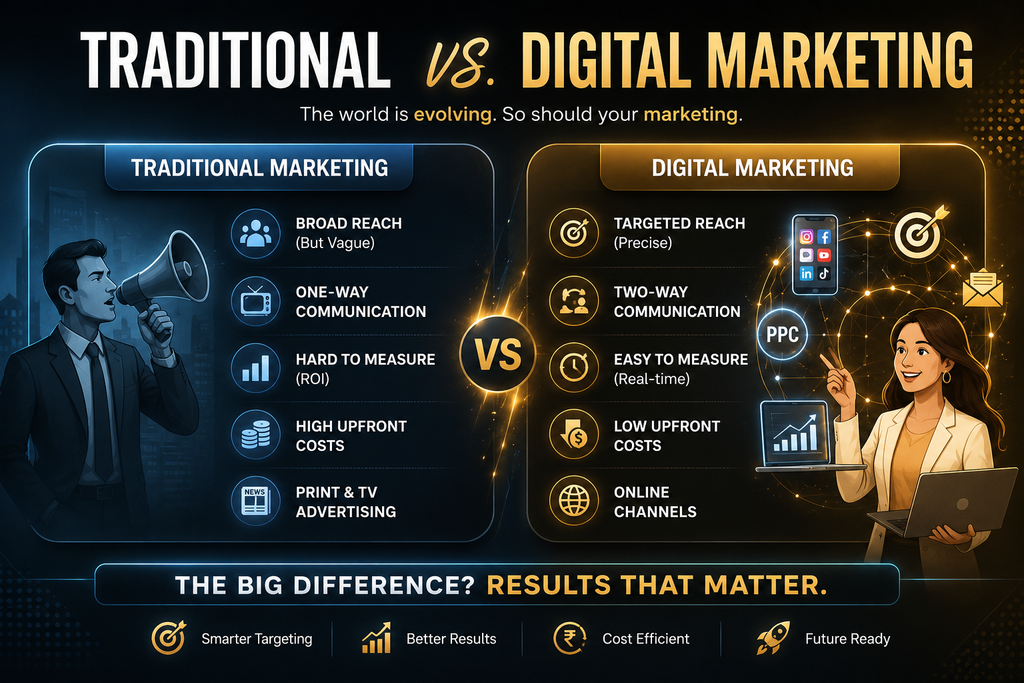
Digital marketing is a technique to promote PRODUCT,SERVICES & BRANDS using digital platform through search engine,social media posts and ads etc.
WHAT IS TRADITIONAL MARKETING ?
Traditional marketing is a technique to promote PRODUCT,SERVICES & BRANDS using physical mode of promotion USING OFFLINE MAEKETING ON SITE , POSTER,NEWSPAPER ads & MAGNIES.
TRADITIONAL MARKETING V/S DIGITAL MARKETING
1. CONTENTS OF DIGITAL MARKETING
Content is the foundation. It provides value, informs, entertains, and convinces your audience to take action
- Written Content: Blogs, articles, search engine optimization (SEO) copy, email newsletters, e-books, and social media captions.
- Visual & Audio Content: Product photography, infographics, short-form video scripts (Reels ,Shorts video), podcasts, and webinars.
- Interactive Content: Polls, quizzes, calculators, surveys, and interactive infographics.
- User-Generated Content (UGC): Customer reviews, unboxing videos, and testimonials that build trust
2. Digital Marketing Aesthetics
Aesthetics govern the visual identity and overall “vibe” of your digital presence. It is what captures attention in the first 3 seconds of scrolling.
Brand Visual Identity: A cohesive palette of colors, typography/fonts, logos, and UI elements used consistently across your website, ads, and social channels.
Whitespace & Structure: Using clean layouts and spatial balance so content doesn’t feel cluttered or overwhelming to the user.
Mood & Vibe: Aligning visual style with your audience (e.g., minimalist and sleek for high-end tech; vibrant and dynamic for youth brands).
High-Production Quality: Crisp imagery, well-edited videos, and tailored graphic design that signal credibility and professionalism.
3. Digital Marketing Dynamics
Dynamics describe the fluid, interactive, and data-driven mechanisms that keep digital campaigns moving, adapting, and converting.
Consumer Behavior & Engagement: How audiences interact with content through likes, shares, comments, clicks, and dwell time.
Algorithmic Mechanics: Navigating platform algorithms (SEO, social feed algorithms, ad auction bidding) to ensure maximum reach and visibility.
Automation & Funnels: Dynamic email sequences, retargeting pixels, and automated customer journeys that adapt based on user actions.
Analytics & Iteration: Real-time feedback loops—using conversion rates, click-through rates (CTR), and A/B test data to continuously adjust campaigns.
Real-Time Adaptation: Capitalizing on real-time trends, viral formats, and seasonal shifts to keep content relevant.
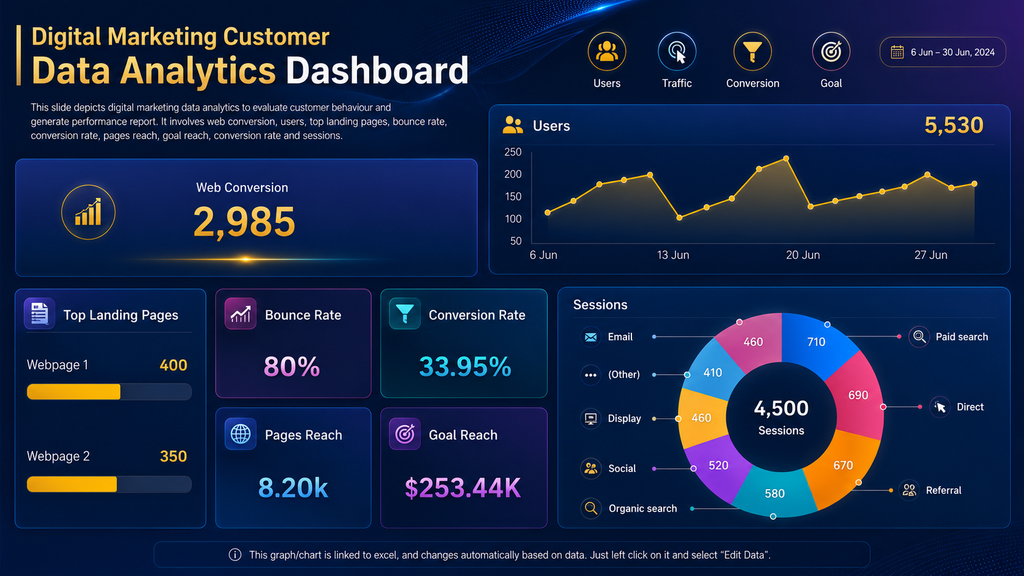
DIGITAL MARKETING PROCESS
1. Strategy & Planning
- Setting marketing goals and KPIs
- Defining target audience / buyer personas
- Competitor analysis
- Market research and positioning
- Budget allocation across channels